Introduction
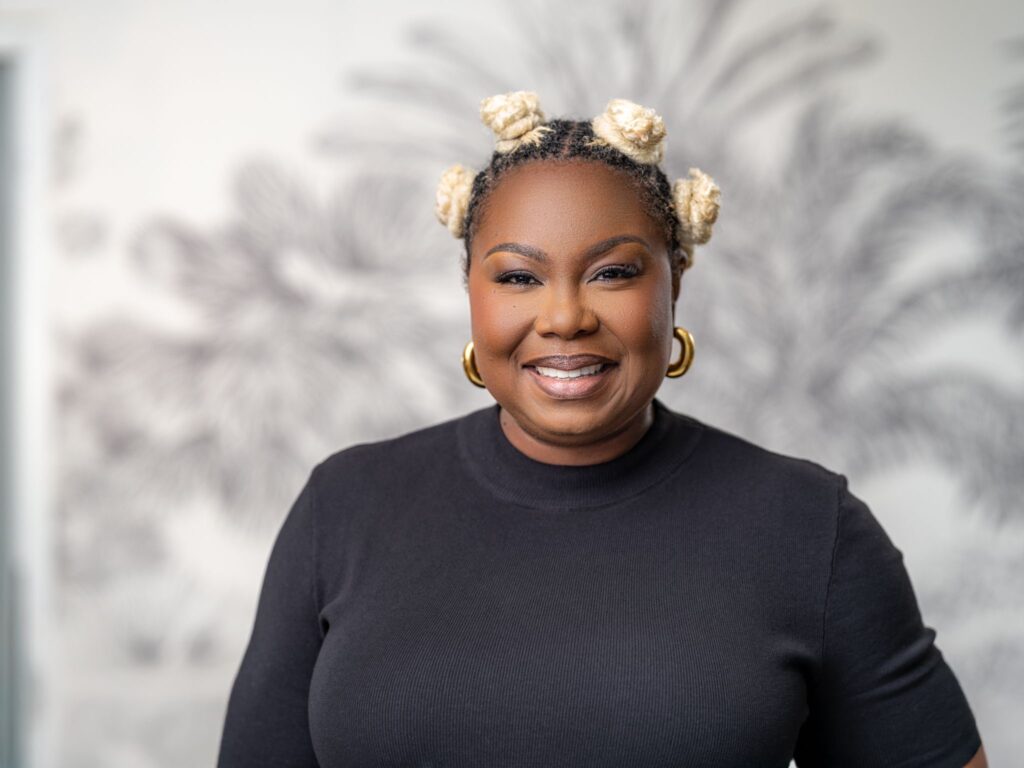
Tamara Gibson is the founder of Native Caribbean Scents Company Ltd, the first House of Caribbean Perfumery. The brand’s signature sweetness comes from an organic sugarcane alcohol base, a rare material in fine fragrance made from a by-product of the Caribbean’s own sugar industry, making the foundation of every perfume deeply connected to its place of origin.
Before launching Native Caribbean in 2020, Tamara worked in international development and project management. A conversation with her grandmother encouraged her to choose a different path. That decision led to a fragrance house with a fresh point of view. Instead of following familiar industry ideas, she focused on creating perfumes that are, in her words, “made of the Caribbean, not in the Caribbean.”
In this exclusive interview, Tamara shares how Native Caribbean grew into a niche luxury fragrance house. She discusses the importance of authorship, ingredient integrity, and creating fragrances that perform in the Caribbean climate. She also explains why she believes the region should be known for creating exceptional perfumes rather than simply supplying ingredients.
Q1. Native Caribbean is now recognized as the first House of Caribbean Perfumery. Let’s go back to the defining moments that transformed the idea from an ambitious concept into a category-defining fragrance house. How has your vision evolved since those early days?
Tamara Gibson: Starting a fragrance company in 2020, mid-pandemic, was equal parts conviction and recklessness. I still can’t tell you which one was driving. The conviction came from my grandmother; the recklessness was all mine. I took the leap anyway.
Native began as a home fragrance with candles first, then reed diffusers, linen, and room sprays. The decision that actually shaped the house came four years later, when we moved into fine fragrance, and I chose not to import a perfumer.
I trained instead in perfumery and in the ingredients of this region that no formal training would have taught me. I formulate every scent myself, in Barbados. I couldn’t have stood behind bottles someone else composed; the story would have been borrowed, and I’d have known it even if no one else did.
The thing that turned a company into something larger was quieter. The ingredients Caribbean people have revered for centuries in our kitchens, our medicine, and our folklore, had almost never made it into perfume. Once you see a gap that size, you can’t unsee it. I stopped thinking about making beautiful products and started thinking about authoring a category. I’d resist “recognized,” though. That word belongs to the future. The claim is being tested in public now, and so far it’s holding.
Q2. The phrase “Perfume made of the Caribbean, not in the Caribbean” has become a powerful statement about authorship and perspective. When building Native Caribbean, how did you determine what aspects of Caribbean identity belonged in luxury perfumery, and what did you deliberately choose to leave out of the narrative?
Tamara Gibson: The line, precisely, is: this is not perfume made in the Caribbean. This is perfume made of the Caribbean. The distinction is authorship.
There are three Caribbeans available to a brand builder. The tourist Caribbean, which is recognisable as palm trees, sunsets, and paradise. The supplier Caribbean, which is the region showing up as raw materials for someone else’s luxury. And there is the ‘lived’ Caribbean where lemongrass is boiled for fever, where bay leaf goes into everything from pest control to old remedies for blood pressure. Where a particular scent means a particular ritual is taking place. We built exclusively from the third.
What we left out was deliberate. No tourist-board vocabulary. No souvenir framing. No nostalgia sold back to the diaspora as a product. We also refused to translate; Caribbean phrases stay in Caribbean creole or dialect. If a customer in London has to look something up, that’s not a barrier. That’s the culture standing at full height.
And we kept it sweet. Sweet is our signature, anchored by our organic sugarcane alcohol base. The fragrance industry treats sweet as juvenile. The Caribbean has always known the difference between sweet and saccharine. We don’t apologise for it.
Q3. Many luxury fragrance houses are built around heritage, geography, and a distinct point of view. As you position Native Caribbean alongside globally recognized niche perfume houses, what standards or principles do you believe are essential for earning credibility in the luxury fragrance space while remaining unmistakably Caribbean?
Tamara Gibson: These aren’t standards I set out to meet. They’re just how the house works, and most of them turned out to be Caribbean before they were “luxury.”
Our ingredients are single-origin because that’s where they’re from: Grenadian nutmeg, Haitian vetiver, Barbadian sugarcane alcohol. The industry calls it provenance. We called it home first.
I formulate every scent myself, in Barbados. In niche perfumery, it reads as a credibility marker, and it is one. But I do it because I trained to do it and because a scent that’s meant to represent a culture should be composed by someone who lives inside it.
The one place I’ve drawn a hard line is performance. Most fragrance is finalised in a temperate lab. Ours has to hold in the heat and humidity of a typical Caribbean day (and night), because that’s where it’s worn. A scent doesn’t leave the house until it behaves here.
That’s the whole of it. I don’t spend much time thinking about whether we belong beside the established names. I think about whether the work is good. The rest tends to follow.
Q4. Native Caribbean has developed experiences such as the Fragrance Bar, where customers actively participate in scent composition. How has observing people create and interact with fragrance in this environment changed your understanding of what modern luxury consumers are seeking beyond simply purchasing a product?
Tamara Gibson: People don’t come to the Fragrance Bar to buy a scent. They come, and often without expecting to, they find out something about themselves.
Scent reaches somewhere language doesn’t. You put something in front of a person, and you get an emotional response before they’ve had time to decide, and sometimes that response surprises them. A note they thought they’d dislike stops them. A material tied to a memory they hadn’t thought about in years. People sit down to make a fragrance and leave having learned what they’re actually drawn to, which isn’t always what they’d have told you at the door.
That changed how I understand what we’re offering. It isn’t a product you take home. It’s a few hours of paying close attention to yourself through the one sense most people never stop to interrogate. I don’t take that lightly. Most brands don’t get to be part of that kind of moment.
What I’ve come to believe is that modern luxury buyers aren’t only looking for a beautiful object handed to them. They want to have made something themselves. In a world full of finished products, the chance to make the thing, to be the one who decides how it is composed, becomes its own kind of luxury.
Q5. Building something like this often requires educating the market while simultaneously growing the business. What has been the most challenging aspect of introducing Caribbean perfumery as a serious luxury category, and how have those challenges shaped your approach to brand building and innovation?
Tamara Gibson: The hardest part is that people don’t arrive neutral. Mass-market perfumery has trained the world’s nose for decades, so by the time someone reaches a niche house, they already have a fixed idea of what perfume is “supposed” to smell like. They’ll tell you the mainstream scent they love and try to stay inside that box.
So the challenge isn’t making something beautiful. It’s interrupting an expectation people don’t know they’re carrying. Our scents are built differently: different materials, a different relationship to sweetness, a Caribbean frame of reference. On first encounter, it can register as unfamiliar before it registers as good.
But something happens when people stay with it. One scent in, their sense of what fragrance can be starts to widen. The box opens. That moment, watching someone’s olfactory world expand in real time, is what tells me the category is real and worth building. It shaped how I think about the work: I’m not competing inside the existing expectation. I’m slowly enlarging it.
Q6. If we were having this conversation ten years from now, what would need to happen for you to feel that Caribbean perfumery has truly secured its place on the global fragrance map? Also, what role do you hope Native Caribbean will have played in defining that future?
Tamara Gibson: Ten years out, I’ll know it’s secured when the Caribbean is known not for what it grows but for what it makes of it. When there’s a recognizable Caribbean way of composing a fragrance, the way France is known for a school of perfumery and not merely for its flower fields. We have spent centuries as the world’s ingredient shelf. The shift I’m after is from being the source of the material to being the author of the finished thing.
The real test won’t be us. It’ll be whether there’s a second house, a third one, and perfumers I’ve never met, composing from a Caribbean point of view, building on supply chains and standards we helped make viable. A category with one member is a curiosity. If Native Caribbean is still the only Caribbean house in ten years, we’ll have failed at the thing we actually set out to do. As for our part, I hope we’re remembered as the house that went first and pioneered a lasting category.
Conclusion
Tamara Gibson’s work is built on cultural knowledge, careful craftsmanship, and a strong belief that the region should author its own fragrance story. Every collection reflects the traditions, ingredients, and daily life that have defined Caribbean communities for generations. Throughout this interview, Tamara explains that success is measured by more than business growth. Her long-term goal is to see Caribbean perfumery become an established category with many fragrance houses contributing their own perspectives. She hopes Native Caribbean will be remembered as the house that opened the door and encouraged others to follow.