
In Hollywood, acting coaches usually work behind the scenes. Their role is quiet but important. They help actors access emotion, shape scenes, and prepare for demanding performances. Their intimate and influential work is, however, within the boundaries of the rehearsal room.
One of Los Angeles’ most respected acting coaches, Claire Chubbuck, has begun to change that.
Known as an acting coach, director, and producer, Chubbuck has expanded her work into story development and production. Her performance-driven philosophy, with its focus on the emotional truth behind a character or subject, has found room behind the cameras of directors. The process is slow but sure, and with her work for Bayan Joonam’s Phoenix Jones, the production of controversial character arcs has started seeing alignment between performance and story.
Phoenix Jones: The Superhero Psychology
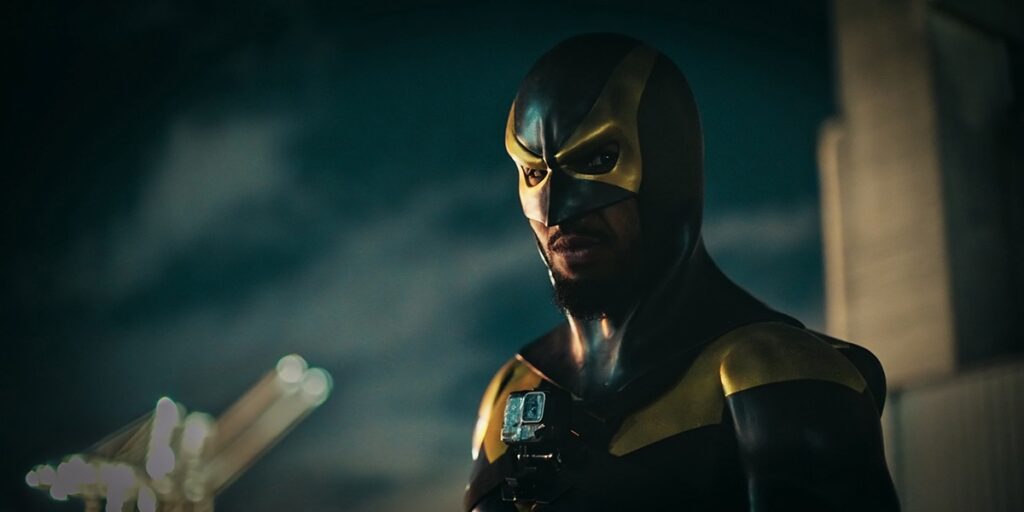
Claire Chubbuck’s philosophy has attracted filmmakers who want deeper psychological storytelling. One example is the documentary Phoenix Jones, directed by Emmy-winning filmmaker Bayan Joonam. The project explores the controversial story of a self-proclaimed superhero from Seattle whose vigilante persona drew global attention.
As documentaries compete with scripted films for emotional impact, directors are increasingly seeking collaborators who understand both performance and narrative. Chubbuck’s background allows her to move between these worlds.
Director Bayan Joonam: Documentary Filmmaking’s Inventive Voice
Bayan Joonam is an Emmy-winning filmmaker who has built a reputation as one of the more inventive voices emerging in documentary filmmaking, combining investigative storytelling with striking visual language. Documentary directors are increasingly treating nonfiction with the narrative sophistication once reserved for scripted films, and as a substantial member of this wave, he examines larger cultural myths through intimate character portraits.
How does Phoenix Jones continue this trajectory? Well, for superheroes, there is usually the spectacle of a masked vigilante; however, Joonam’s documentary proceeds to comprehend the very nature of heroism, identity, and public mythology. The examination of the idea in the age of social media calls for another layer of psychological insight.

The Chubbuck Technique and Psychological Insight
To help navigate those psychological layers, Joonam leaned on Chubbuck’s background in actor training. The collaboration offered an unusual creative advantage.
While Chubbuck has previously produced documentary projects, Phoenix Jones marks the first time she consciously integrated the skills she developed over decades as an acting coach into her producing process.
She reveals how actors are trained to reveal inner motivations under pressure. Documentary subjects face similar pressure when a camera is present, yet they often lack the tools to express what they truly feel. “Actors are trained to access truth under pressure. Real people on camera are facing that same pressure,” she explains.
She furthers her role by working directly with the film’s on-camera participants to help them move past surface-level interviews and reach something more emotionally honest. This entails supporting the director when creative pressure escalates and story direction shifts.

The Growing Importance of Emotional Truth in Modern Filmmaking
The modern audience expects more from film and documentary storytelling. Viewers want emotional depth. They want to understand why people act the way they do.
This shift has changed how directors approach nonfiction storytelling. Documentary subjects are no longer treated simply as interviewees. They are central characters whose psychology shapes the narrative.
This is where Claire Chubbuck’s expertise becomes valuable. Her perspective turns interviews into moments of discovery rather than rehearsed responses, allowing directors to capture more honest emotional reactions. This is especially relevant in the case of Phoenix Jones, who carries increasing complexities of private life while retaining the construction of a public identity.
Bayan Joonam’s direction lingers longer on the human contradictions behind the spectacle than on the spectacle itself. This makes the portrait both cinematic and psychologically layered.

Conclusion
Claire Chubbuck represents a changing idea of what a filmmaker can be. As an acting coach, she moves between the roles of creative and psychological director and producer. With every project, her goal remains to seek emotional truth. With the documentary premiering at SXSW, the shift in producers’ evolving role is quite clear.
For Chubbuck, the transition from acting coach to story collaborator may feel like a natural extension of what she has been doing for years. But for filmmakers like Joonam, it represents something closer to a creative advantage: a producer who understands not only how stories are built, but how truth emerges on camera.
This is poised to become the industry’s most valuable tool, especially in an environment where documentaries are increasingly competing with scripted films for emotional impact.