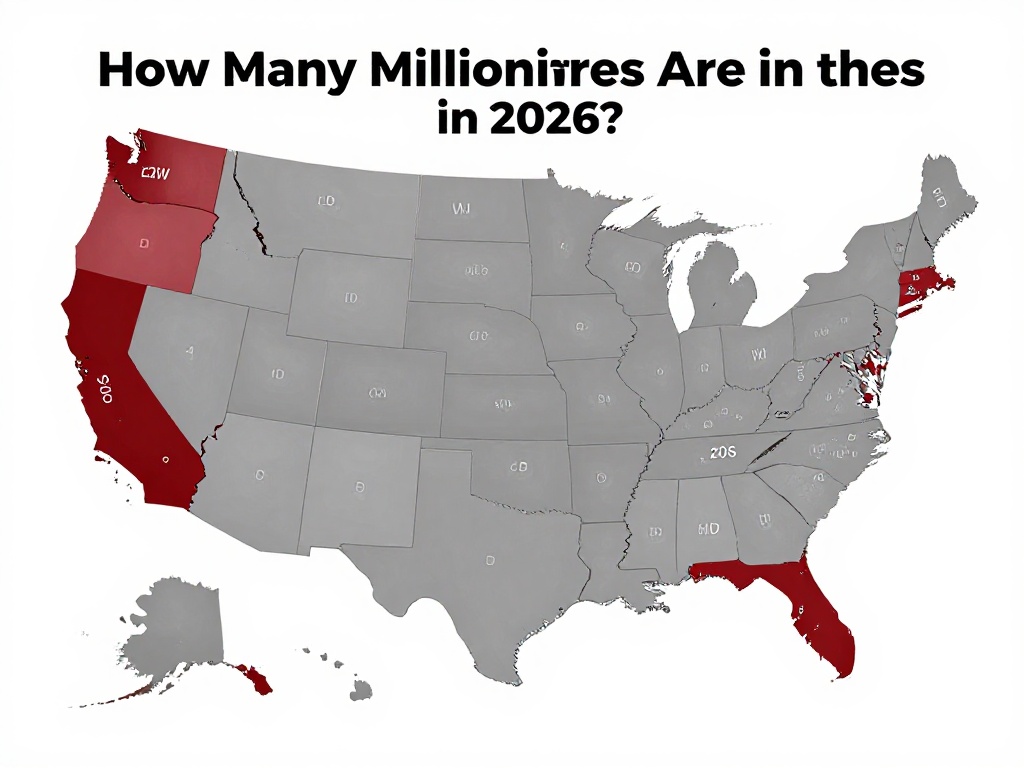
The United States continues to lead the world in wealth creation. As of 2026, there are approximately 24 million millionaires living in America. This staggering figure represents about 8.8% of all American adults — or roughly 1 in every 11 to 12 adults.
Whether you’re curious about the millionaire next door, dreaming of joining their ranks, or simply tracking economic trends, this comprehensive guide breaks down the latest data, demographics, growth trends, state-by-state insights, and actionable strategies to build wealth in today’s economy.
What Exactly Qualifies Someone as a Millionaire?
A millionaire is typically defined as an individual with a net worth of $1 million or more (total assets minus liabilities). Sources like the UBS Global Wealth Report use this broad net worth metric.
- Net worth millionaires (including home equity): ~23.8–24 million.
- High-Net-Worth Individuals (HNWIs) (investable assets excluding primary residence, per stricter Capgemini definitions): Around 7.9 million.
This distinction matters. Many “millionaires” have significant home equity but more modest liquid assets. The average American household net worth recently crossed $1 million for the first time, driven by rising home values, stock market gains, and retirement savings.
Key Takeaway: Being a millionaire today doesn’t always mean flashy luxury. Many live modestly while their investments compound over decades.
Current Number of Millionaires in the US (2026 Update)
According to the UBS Global Wealth Report 2025 and supporting analyses:
- Total US millionaires: ~23.8 million in 2024, growing to approximately 24 million in 2026.
- The US accounts for nearly 40% of the world’s millionaires, despite representing only about 4.2% of the global population.
- In 2024 alone, America added over 379,000 new millionaires — that’s more than 1,000 per day.
Global context:
- China: ~6.3 million
- Japan, Germany, UK, France: Each under 3 million
The US maintains a massive lead.
Historical Growth: From Rare to Relatively Common
The explosion in millionaire numbers is one of the most remarkable economic stories of the past decade:
| Year/Period | US Millionaires (Approx.) | Key Drivers |
|---|---|---|
| 2016 | ~13.5 million | Post-recession recovery |
| 2024 | 23.8 million | Stock boom, home equity, tech gains |
| 2026 (current) | ~24 million | Continued compounding |
| Projected 2030 | 31.2 million | Demographic shifts, market growth |
This represents nearly a doubling in just 10 years. Factors include:
- Strong equity markets (S&P 500 gains)
- Rising real estate values
- 401(k) and IRA participation
- Entrepreneurship and side hustles
Note on Inflation: A million dollars today buys less than in the past. Many millionaires report not “feeling rich” due to high costs in housing, healthcare, and education.
Demographics of US Millionaires
Who are these 24 million people? Data from Federal Reserve, UBS, Ramsey Solutions, and other studies paint a clear picture.
Age
- Average age: 57–61 years old.
- Most reach millionaire status around age 50 after 25–30 years of consistent effort.
- Wealth peaks in the 60s–70s due to compounding and home equity.
- Younger millionaires (under 40) are rarer but often tech entrepreneurs or inheritors.
Education
- 88% hold college degrees (vs. ~33% of general adult population).
- Advanced degrees (Master’s, PhD, professional) are common among higher-wealth brackets.
- Top fields: Engineering, business, finance, medicine, law.
Gender
- Approximately 33% are women, a share that’s growing due to the Great Wealth Transfer and increasing female entrepreneurship and workforce participation.
Race and Ethnicity
Wealth gaps exist:
- White households have significantly higher rates of millionaire status.
- Asian Americans often show strong outcomes due to education and cultural emphasis on saving/investing.
- Black and Hispanic households have lower representation but growing numbers, especially among professionals and business owners.
These are averages and trends — individual outcomes vary widely based on personal habits, opportunities, and circumstances.
Top States with the Most Millionaires
Millionaires cluster in economic powerhouses and attractive lifestyle states.
Absolute Numbers (Millionaire Households, recent data):
- California — ~1.15 million+
- Texas — ~650,000+
- New York — ~570,000+
- Florida — ~497,000+
- Illinois, Pennsylvania, New Jersey, etc.
Highest Concentrations (Per Capita/Percentage):
- New Jersey, Maryland, Connecticut, Massachusetts, Hawaii often lead in percentage of millionaire households.
Cities Leading the Pack:
- New York City: ~384,500 millionaires
- San Francisco Bay Area: ~342,400
- Los Angeles: ~220,600
Migration trends show affluent individuals moving to no-income-tax states like Florida and Texas.
How Most Millionaires Actually Build Wealth
The “overnight success” narrative is mostly myth. Here’s what real data shows:
- 79% received no inheritance.
- Primary sources: Consistent investing (especially in retirement accounts), home ownership, career income, and entrepreneurship.
- Dave Ramsey’s National Study of Millionaires (10,000+ surveyed): Most are regular people who lived below their means, invested long-term, and avoided debt.
- Average 401(k) millionaire: Invests ~17% of income for 25+ years.
Common Habits:
- Live frugally relative to income (“millionaire next door” lifestyle).
- Maximize employer retirement matches.
- Diversify investments (stocks, real estate, businesses).
- Continuous skill development and career advancement.
- Strong marriages and dual incomes in many cases.
Industries Producing Millionaires:
- Technology and finance lead, but teachers, engineers, accountants, and small business owners are well-represented.
The Impact of Economic Factors on Millionaire Growth
Several forces drive the surge:
- Stock Market: Bull runs boosted retirement accounts.
- Real Estate: Home values soared post-2020.
- Inflation and Asset Appreciation: Helped those with assets but challenged wage earners.
- Tech Boom: Created new wealth in Silicon Valley and beyond.
- Pandemic Savings: Some households built cash reserves that later invested.
Challenges:
- Wealth inequality remains high — top 10% hold most wealth.
- Many “new” millionaires feel squeezed by costs.
- Future risks: Market volatility, interest rates, geopolitical issues.
How to Become a Millionaire: Practical Strategies for 2026 and Beyond
You don’t need to be a genius or inherit money. Here’s a proven path:
- Start Early with Compound Interest — Even small amounts grow massively over time.
- Live Below Your Means — Track expenses and save 15–25%+ of income.
- Increase Earnings — Side hustles, career growth, skills in high-demand areas.
- Invest Consistently — Index funds, retirement accounts (401k, IRA, Roth).
- Avoid Bad Debt — Pay off consumer debt aggressively.
- Build Multiple Income Streams — Real estate, business ownership, dividends.
- Protect Wealth — Insurance, estate planning, tax efficiency.
- Mindset — Long-term thinking, resilience, continuous learning.
Realistic Timeline:
- Starting at 25 with consistent 15% savings/investing: Possible by 50–55.
- Higher income accelerates this dramatically.
Tools for 2026:
- Robo-advisors and low-cost ETFs.
- High-yield savings and CDs for emergency funds.
- Tax-advantaged accounts.
- Apps for budgeting and net worth tracking.
Millionaires by the Numbers: Quick Stats
- Homeownership: 95% of millionaires own homes.
- Stock Ownership: ~47% actively invest in stocks.
- Self-Made: Majority built wealth through work and investing.
- Charity: High rates of giving back.
Common Myths About Millionaires Debunked
- Myth: Most inherit their wealth. Fact: 79% did not.
- Myth: They all drive luxury cars and live lavishly. Fact: Many are frugal.
- Myth: You need a six-figure salary. Fact: Discipline matters more.
- Myth: It’s too late if you’re over 40. Fact: Many start later and succeed.
- Myth: Millionaires are greedy. Fact: Many are generous philanthropists.
The Future of Wealth in America
Projections suggest continued growth to over 30 million millionaires by 2030. The “Great Wealth Transfer” — trillions moving from Baby Boomers to younger generations — will reshape demographics.
AI, technology, and new industries will create fresh opportunities. However, economic uncertainty, policy changes, and global events could impact trajectories.
Frequently Asked Questions (FAQ)
How many millionaires are there in the US right now? Approximately 24 million as of 2026.
What percentage of Americans are millionaires? Roughly 7–8.8% of adults, depending on exact metrics.
Which state has the most millionaires? California leads in absolute numbers, followed by Texas and New York.
Can you become a millionaire on a normal salary? Yes — through consistent saving, investing, and time in the market. Many teachers, government workers, and middle-class professionals achieve it.
What’s the average net worth of a US millionaire? Varies widely; many fall in the $1–5 million range (“everyday millionaires”).
How do most people lose millionaire status? Lifestyle inflation, poor investments, divorce, health issues, or business failures.
Is $1 million enough to retire? It depends on lifestyle, location, healthcare costs, and longevity. Many aim for $2–5 million+ for comfort.
Are there more millionaires now than ever? Yes, by a significant margin. The number has grown dramatically over the past decade.
Conclusion: Your Path Forward
America’s 24 million millionaires prove that wealth-building is achievable for those who commit to proven principles: live below your means, invest consistently, increase your value, and think long-term.
Whether you’re starting from zero or already on the path, the data is encouraging. The same economic engines creating today’s millionaires — compounding, entrepreneurship, and innovation — are available to you.
Start today. Track your net worth. Make one better financial decision. Over time, these compound into extraordinary results.
The millionaire next door wasn’t born that way — they built it, one smart choice at a time. You can too.
This article is for informational purposes. Consult qualified financial, tax, and legal professionals for personalized advice. Data sourced from UBS, Federal Reserve, Capgemini, Ramsey Solutions, and other reputable reports as of 2025–2026.