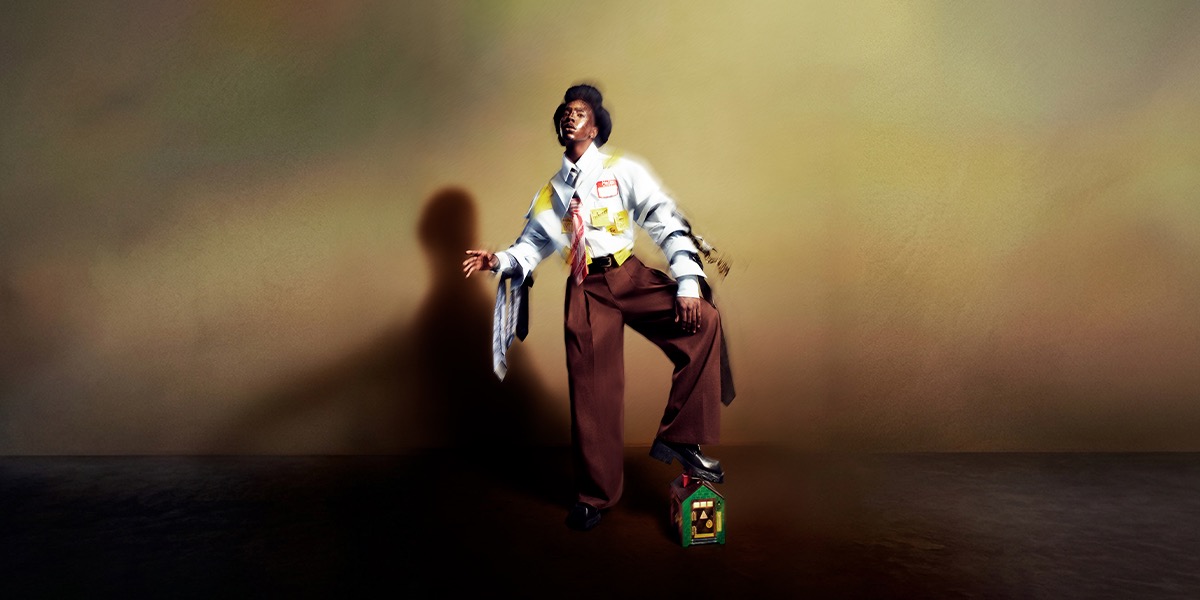
There’s a version of Caribbean artistry the world is used to seeing. It tends to be exported on someone else’s terms, shaped to fit a market, softened at the edges, and stripped of its specificity. Agajuan Culmer refuses that version entirely. He is the artist the Bahamas has been waiting for.
At 23 years old, the Bahamian singer-songwriter and creative director is building a body of work that reflects his roots. His debut album, Village Van Gogh, was released on November 18, 2025, as a statement of identity.
Agajuan’s platform, UNAJ, is an artistic universe that houses his music, visual work, and his broader mission to redefine what Caribbean creative output looks like globally.
The Problem with How the Industry Sees Caribbean Artists
The music industry has long treated Caribbean artists as a genre rather than a category of human beings with stories to tell. The expectation is often rhythm-forward, export-friendly content that leans on cultural aesthetics without going deeper. Genuine and personal complexity rarely gets a seat at the table.
Media representation of artists from the Global South disproportionately flattens their work into cultural shorthand, reducing entire creative traditions to marketable surface elements. In doing so, the actual narratives go untold.
Agajuan has spoken openly about this dynamic. In his own words, his vision is to “break barriers and carve a global platform for Bahamian talent, creating opportunities for aspiring artists, both young and old.”
Growing up in a Christian household in the Bahamas, self-expression was not always encouraged in the way Agajuan needed it. He found music and made it his sanctuary.
Village Van Gogh: A Community Portrait in Sound
The album’s title says a great deal. Van Gogh painted with emotional rawness and found beauty in ordinary life. Agajuan does the same, but his canvas is the Bahamian village, and his medium is the coming-of-age story.
From the second track, “The Village,” the album establishes a moral theme. The lyrics ask uncomfortable questions: “What happened to protecting all the kids in the village? Used to play games, now there’s pain in the village.” He holds power accountable as a young man looking at his community with clear eyes and refusing to romanticize the decline.
By track five, “Solitaire (Kid),” he becomes introspective. “Now that little boy grew from a child to a man / The more and more he grew, he got closer to the plan / Cuz I know who I am.” The growth arc speaks for every kid who was told to be smaller than they were.
The most popular track, “Bishop,” becomes a mantra of confidence: “Stand so tall, they can’t look past you.”
The music also sways between vulnerability and defiance. “Rebel,” track eleven, shares: “So here’s to the rebel, here’s to the fight / Taking back control, reclaiming the night.” As one of the concluding tracks, Agajuan instills spirit and hope, celebrating the new generation.
Agajuan is not only a recording artist. He is also a songwriter, creative director, visual artist, photographer, and graphic designer. He controls the aesthetic output of his brand, keeping the creative vision fully intact.
Building a Road Back Home
The most interesting thing about Agajuan’s global ambition is hopes to nurture Bahamian talent. He is explicit about his intention to open doors for others from his homeland.
“One day, I aspire to open my own studio and record company, where I can nurture and push local talent, providing a space where Bahamians can shine and be heard on the world stage. We are truly blessed and talented, and I want to be a driving force in elevating that truth,” he shared as his personal dream.
On track six, “Gen Z,” he speaks for the generation he belongs to: “We are the dreamers / The lovers, the fighters / Light up the whole world / Shine brighter than brighter.” The lyrics are self-descriptive as well as recognition for every young creative from a place the world overlooks.
Conclusion
Agajuan Culmer has already begun sharing his message with the world through Village Van Gogh. What he represents for Caribbean creativity is proof that the stories coming out of island communities are complex, specific, and powerful enough to stand on their own without being reshaped for outside consumption. With more music on the way, his journey is only just starting.